Chapter 2: The Ghost in the West Wing
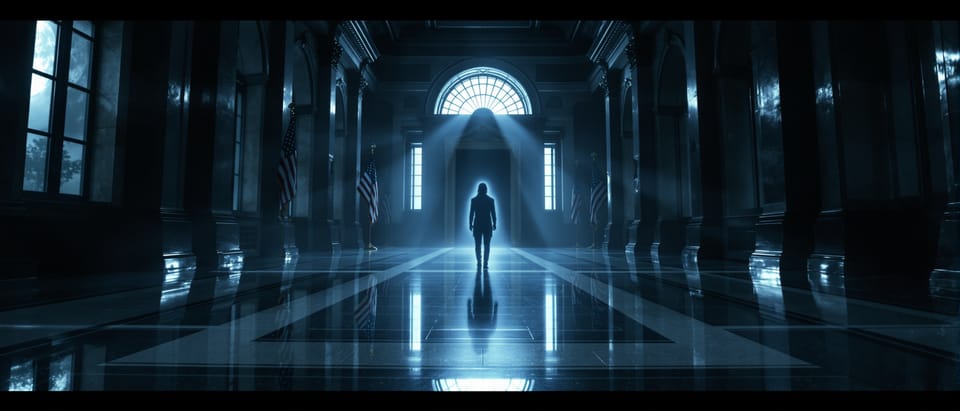
Elena Hale sat in the Lincoln Bedroom, the air conditioning humming at a clinical sixty-eight degrees. The room was a monument to curated history—the rosewood bed that Mary Todd Lincoln had purchased, the Victorian wallpaper that had been restored three times, the heavy damask curtains that pooled on hardwood floors polished to a mirror finish. Every surface spoke of tradition, permanence, the unbroken continuity of American power. Elena found it suffocating.
She was perched on the edge of an upholstered settee near the window, her posture the careful arrangement of a woman who had learned to occupy space without claiming it. She wore a cream silk robe over a simple cotton nightgown—the kind of outfit that suggested she had been preparing for sleep, that she was a woman winding down from a long day of flower arrangements and correspondence. The outfit was a costume. Everything Elena Hale wore in this building was a costume.
To the outside world, she was the decorative centerpiece of the Hale administration—the woman who handled the White House Easter Egg Roll and the state dinner menus, who appeared in photo opportunities with visiting dignitaries' wives, who wore tasteful pastels and smiled with the practiced warmth of someone whose only ambition was to make the powerful comfortable. She had been profiled in three magazines this year alone. Each profile used the same words: gracious, elegant, devoted. One had called her "the administration's most beautiful asset." She had read that line and felt something cold settle in her chest, a fury so compressed it was almost geological.
In reality, she was the most dangerous person in the building.
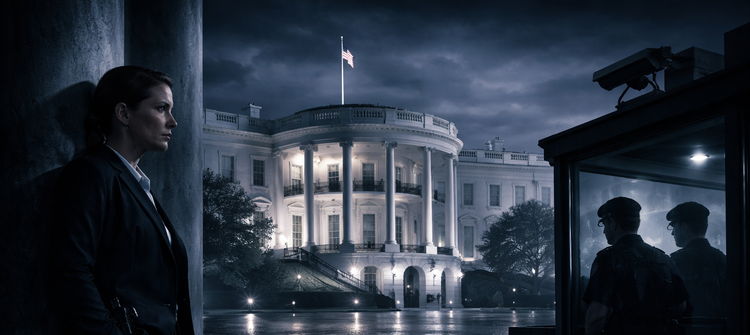
The Lincoln Bedroom was on the second floor of the White House Residence, separated from the President's study by a short hallway and a door that was usually left open. Tonight, it was ajar, and through the gap Elena could see the angular silhouette of her husband hunched over his desk, the blue-white glow of a secure communications terminal illuminating his face from below like a man reading by flashlight in a cave. President Calder Hale was a physical man—tall, thick through the chest, with the blunt features and heavy brow of someone who had been handsome in his youth and had aged into something more intimidating than attractive. He moved through rooms the way weather systems moved through valleys: you felt him before you saw him, and by the time he arrived, the atmosphere had already changed.
She watched him through the open door of the study. He was on a secure line with the Joint Chiefs, his voice a low, predatory growl. The study was paneled in dark walnut, lined with books that Calder had never read—they were props, selected by a decorator for their binding colors. The desk was a reproduction of the Resolute desk, installed because the real one was in the Oval Office and Calder liked the symbolism of having authority in every room. A crystal tumbler of bourbon sat at his elbow, half-empty. He drank more than he used to. Elena had been tracking the bottles.
"I don't care about the optics of the National Guard in the suburbs," Calder said, his voice carrying through the hallway with the flat authority of a man who had never been told no and had long since stopped imagining the possibility. "I want the Heritage Units on the ground by 06:00 on the Fifth. If the governors balk, invoke the Insurrection Clause. We've spent four years building this leverage. Use it."
There was a pause—someone on the other end of the line attempting to introduce nuance into a conversation that didn't want any. Elena could imagine the scene at the Pentagon: uniformed men sitting around a mahogany table, exchanging glances, calibrating their responses to the frequency of the President's anger. She had been in enough rooms with Calder to know how this worked. He would issue a directive. Someone would raise a concern. Calder would repeat the directive, louder, as if volume were a form of evidence. And eventually, the concern would be withdrawn, not because it was wrong but because the cost of being right was too high.
"General, let me make this simple," Calder continued, and Elena heard the creak of his chair as he leaned forward. "The Heritage Restoration Act gives us statutory authority. The Emergency Stability Act gives us operational latitude. And the executive orders I signed in February give us plausible deniability for anything that happens between deployment and daylight. This is not a request. This is a timeline."
Elena's fingers tightened imperceptibly on the object in her lap.
It was small—no larger than a button battery—and cased in a shell of dark resin that Aris Thorne had printed on a modified stereolithography machine in her Alexandria basement. The biometric repeater. Six months of engineering compressed into a device that weighed less than a coin. Aris had explained the mechanics in the careful, patient way of someone accustomed to translating complexity for non-technical audiences: the President's Life-Line watch—a custom-built biometric monitoring device worn by every president since the technology was mandated after the assassination attempt on President Whitfield in 2019—transmitted a continuous encrypted signal to the Pentagon's Executive Protection Division. Heart rate, blood oxygen, skin temperature, GPS coordinates. If the signal deviated from baseline parameters—if the President's heart rate spiked unexpectedly, if his location moved outside pre-approved zones, if the watch was removed—a Level 1 Alert would hit the Pentagon in six seconds. Within thirty seconds, a rapid response team would be activated. Within two minutes, the entire White House security apparatus would lock down.
The repeater was designed to intercept that signal. Once attached to the watch—a magnetic coupling that would click into place beneath the watch face, invisible to the wearer—it would capture the biometric data and relay it to Aris's monitoring station in Alexandria. From there, Aris could loop the signal, feeding the Pentagon a continuous stream of the President's normal resting parameters while Elena and the others did what needed to be done.
If the watch detected an anomaly before the repeater was in place—if Elena fumbled, if Calder woke, if the magnetic coupling failed to seat properly—a Level 1 Alert would hit the Pentagon in six seconds. And everything they had built would collapse.
Elena turned the device over in her fingers, feeling the slight warmth where the internal battery met the casing. She thought about the first time Aris had shown her the prototype, three months ago, in the back room of a dry cleaner's in Georgetown that served as one of the Tuesday Literary Society's rotating meeting points. Aris had held it up between her thumb and forefinger, turning it in the light like a jeweler appraising a stone.
"This is either going to save the republic or get us all killed," Aris had said, with the flat, unadorned candor that Elena had come to rely on. "There is no middle outcome."
Elena had taken the device and studied it. "How close do I need to be?"
"Contact distance. The magnetic coupling needs to seat against the watch casing. You'll feel a click—very faint, like a pen cap snapping. Once it's coupled, I need ninety seconds to capture the baseline signal and begin the loop. During those ninety seconds, the President cannot move. His heart rate cannot elevate. Nothing can change."
"He'll be asleep," Elena had said.
"Then pray he doesn't dream."
Now, sitting in the Lincoln Bedroom with the repeater in her lap and her husband's voice growling through the study door, Elena allowed herself a moment of pure, crystalline fear. Not the diffuse anxiety that had become her baseline over the past four years—the constant, low-grade dread of living with a man who was systematically dismantling the institutions she had once believed were permanent. This was specific. Operational. The fear of a surgeon before an incision, a diver before a descent. She acknowledged it, measured it, and set it aside.
Calder's call was winding down. She could hear the change in his tone—the shift from imperative to declarative that signaled he was delivering his closing statement, the verbal equivalent of a gavel strike.
"By the Fifth, General. Zero-six-hundred. And tell Hendricks that if his Heritage Unit commanders aren't at their staging points by midnight, I'll find commanders who are. Hale out."
The secure terminal emitted a soft chime as the connection closed. Elena heard the clink of the bourbon glass, the scrape of his chair. She slipped the repeater into the pocket of her robe in a single, fluid motion—practiced so many times in front of a mirror that the gesture had become as natural as tucking a strand of hair behind her ear.
Calder appeared in the doorway of the study, filling it the way he filled every doorway—completely, as if the architecture had been designed to frame him. He looked at Elena with the expression he reserved for her in private: a kind of distant approval, like a collector regarding a piece he was satisfied with but rarely examined closely.
"Still up?" he asked.
"Couldn't sleep," she said. "The humidity."
He grunted—a sound that served as acknowledgment, dismissal, and transition all at once. "The Joint Chiefs are on board. Hendricks is dragging his feet, but he'll fall in line. They always do." He loosened the top button of his shirt and moved toward the bedroom. "Tomorrow's going to be a long day. The ceremony starts at ten. I want you in the blue dress—the one from the French state dinner. It photographs well with the bunting."
"Of course," Elena said. She rose from the settee and followed him toward the bedroom, matching her pace to his, a half-step behind—the precise choreography of a political marriage, rehearsed until it was invisible. She thought about all the times she had walked this hallway behind him, this exact distance, this exact rhythm. The geometry of submission, performed so consistently that it had become a kind of camouflage. Calder never looked back when she was behind him. He assumed she was there the way he assumed the floor was beneath his feet.
A soft knock at the service door made her heart skip.
The service door was set into the wall of the corridor between the Lincoln Bedroom and the residential kitchen—a narrow, unobtrusive panel painted the same cream as the surrounding wall. Most visitors to the White House Residence never noticed it. It was a door for the invisible: the staff who brought trays, changed linens, and ensured that the machinery of domestic life operated without friction. It was, Elena reflected, the perfect metaphor for everything the Tuesday Literary Society had built.
Diego Soto stepped in, carrying a tray with a silver carafe of decaf coffee and two porcelain cups. He was a compact man in his early fifties, with dark hair graying at the temples and the kind of quiet, watchful face that people's eyes slid over without registering. He had worked in the White House Residence for eleven years, serving three administrations. He knew the building the way a surgeon knows anatomy—not just the rooms and corridors but the rhythms, the patterns, the micro-routines of the people who inhabited them. He knew which agents took smoke breaks at which doors. He knew which floorboards creaked. He knew the exact interval between security camera sweeps in the East Wing hallway.
He set the tray on the sideboard with the silent efficiency of a man whose livelihood depended on being unnoticed. Then he turned to Elena, and for a fraction of a second, the mask slipped—not the professional mask, but something deeper. She saw concern in his eyes, raw and unguarded. She saw the face of someone who understood exactly what she was about to do and was terrified for her.
"The service elevator is keyed for the 02:00 AM rotation, ma'am," he whispered. His voice barely registered above the hum of the air conditioning. "Commander Vance has swapped the hallway detail. You have a four-minute window."
Four minutes. Two hundred and forty seconds between the moment the old detail signed off and the new detail—Vance's people, their people—assumed their posts. In that window, Elena would move from the Residence to the President's bedroom, plant the repeater on his watch, and return. The margin for error was nonexistent.
"And the sensors in the East Wing?" Elena asked. She kept her voice in the same register she used when discussing dinner arrangements or guest lists—steady, domestic, unhurried. Even here, even now, the performance continued. There were microphones in the walls of the White House that recorded everything. Not surveillance, officially—they were part of the Presidential Records system, mandated by an act of Congress that predated the Hale administration. But Elena had long since stopped believing in the distinction between documentation and surveillance.
"Looped," Diego said. The word was barely a breath. "The maintenance contractor Miller is in the briefing room reviewing the overnight security logs. He thinks he's monitoring the staff movement patterns. He's actually watching a loop of an empty hallway that Chloe coded to include the exact ambient noise fluctuations of the East Wing at this hour."
Elena absorbed this. Miller was a problem they had spent weeks analyzing. He was not Heritage—not a true believer, not an ideologue. He was a private security contractor brought in six months ago to upgrade the White House's interior monitoring systems. He was competent, detail-oriented, and—most dangerously—bored. A bored man with access to security feeds was more dangerous than a zealot, because a zealot saw what he expected to see, while a bored man noticed anomalies simply because they were interesting.
"Thank you, Diego."
He set the silver carafe down and met her eyes. In that look was everything they could not say in a building that listened. Eleven years of service. Four years under the Hale administration, watching the Residence transform from a house of state into something that felt increasingly like a compound. He had seen the Heritage liaisons installed in the staff quarters. He had seen colleagues quietly reassigned—or simply absent one morning, their lockers cleaned out, their names removed from the rotation as if they had never existed. Diego had survived by being indispensable and invisible, and he had turned that invisibility into a weapon.
"Be careful, Elena," he said. The use of her first name was deliberate—a breach of protocol that carried the weight of genuine intimacy. In the eleven years Diego had served in the Residence, he had never once addressed a First Lady by her first name in the building. That he did so now told Elena everything she needed to know about what this night meant to him.
"If Miller catches a glitch in the loop—a frame stutter, a shadow in the wrong place, anything—he'll trigger the lockdown. And if lockdown initiates before you've returned to the Residence corridor, Commander Vance won't be able to reach you. The True Believer detail on the ground floor will seal every access point in ninety seconds."
Elena looked at the repeater's faint outline in the pocket of her robe. She thought about the ninety seconds Aris needed to capture the baseline. She thought about the sound Calder made when he slept—a low, rhythmic breathing that occasionally hitched into a soft grunt when he shifted position. She had lain beside that sound for twelve years. She knew its patterns the way a navigator knows tides. She would know if he was waking before he did.
"He won't catch it," Elena said. Her voice was calm—not the performed calm of her public persona, but something deeper and harder, forged over four years of watching her husband sign executive orders that erased people. "He thinks we're furniture. And furniture doesn't move."
Diego held her gaze for a moment longer. Then he nodded once—a small, tight motion—picked up the tray, and slipped back through the service door. The panel closed behind him with a whisper of oiled hinges. Within seconds, the corridor was empty, the tray was gone, and there was no evidence that the exchange had ever occurred. That was the art of it. That was what the men in this building never understood. The most consequential conversations in the White House didn't happen in the Situation Room or the Oval Office. They happened in hallways, in kitchens, in the three-second window between a door opening and closing. They happened between people who had been trained, by years of institutional invisibility, to make themselves disappear.
Elena poured a cup of the decaf—because the cameras were always watching, and a woman pouring coffee at eleven o'clock was the most unremarkable image in the world—and carried it to the window of the Lincoln Bedroom. She stood there, sipping, looking out at the South Lawn, where the groundskeeping crew had already hung the bunting for tomorrow's ceremony. Red, white, and blue fabric snapped lazily in a breeze that did nothing to cut the humidity.
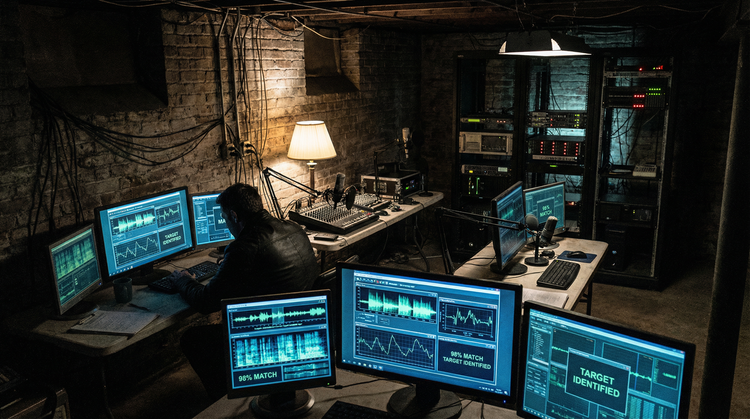
Somewhere out there, twelve miles to the south, Aris Thorne was sitting in a basement in Alexandria, watching a screen that would soon display the President's heartbeat. Commander Sarah Vance was in the shadows of the North Portico, orchestrating the most delicate personnel operation in the history of the Secret Service. Captain Maya Jenkins was positioning Blue Shield units at the Navy Yard, their transport vehicles parked behind the long gray warehouses where tourists never ventured. And Evelyn Ward was lying in a bed in Kalorama, her eyes open in the dark, waiting.
They were all waiting. The entire machine was wound and trembling, like an orchestra holding the rest before a downbeat.
Elena finished her coffee. She rinsed the cup in the small sink of the residential kitchen—a domestic act so unremarkable that even the recording systems would dismiss it—and returned to the bedroom. Calder was already in bed, the covers pulled to his waist, his Life-Line watch glowing faintly on his left wrist. The watch face emitted a soft blue pulse every three seconds—a heartbeat indicator that the Secret Service monitored remotely and that Calder wore with the same unconscious vanity with which he wore his wedding ring: not as a bond but as a badge.
She lay down beside him. He was already descending into sleep, his breathing thickening, his body radiating the residual heat of bourbon and authority. She stared at the ceiling and listened to the building settle around her—the tick of cooling pipes, the distant murmur of the overnight detail checking in, the almost subliminal hum of the electronic security grid that wrapped the White House like a net.
In two hours and forty-seven minutes, she would rise from this bed, cross the three feet to his nightstand, and plant a device on his watch that would sever the most powerful man in the world from the apparatus that protected him. She would do this in silence, in darkness, within arm's reach of a man who could end her life with a single phone call.
She closed her eyes and began to count. Not sheep. Not breaths. Seconds.

Member discussion